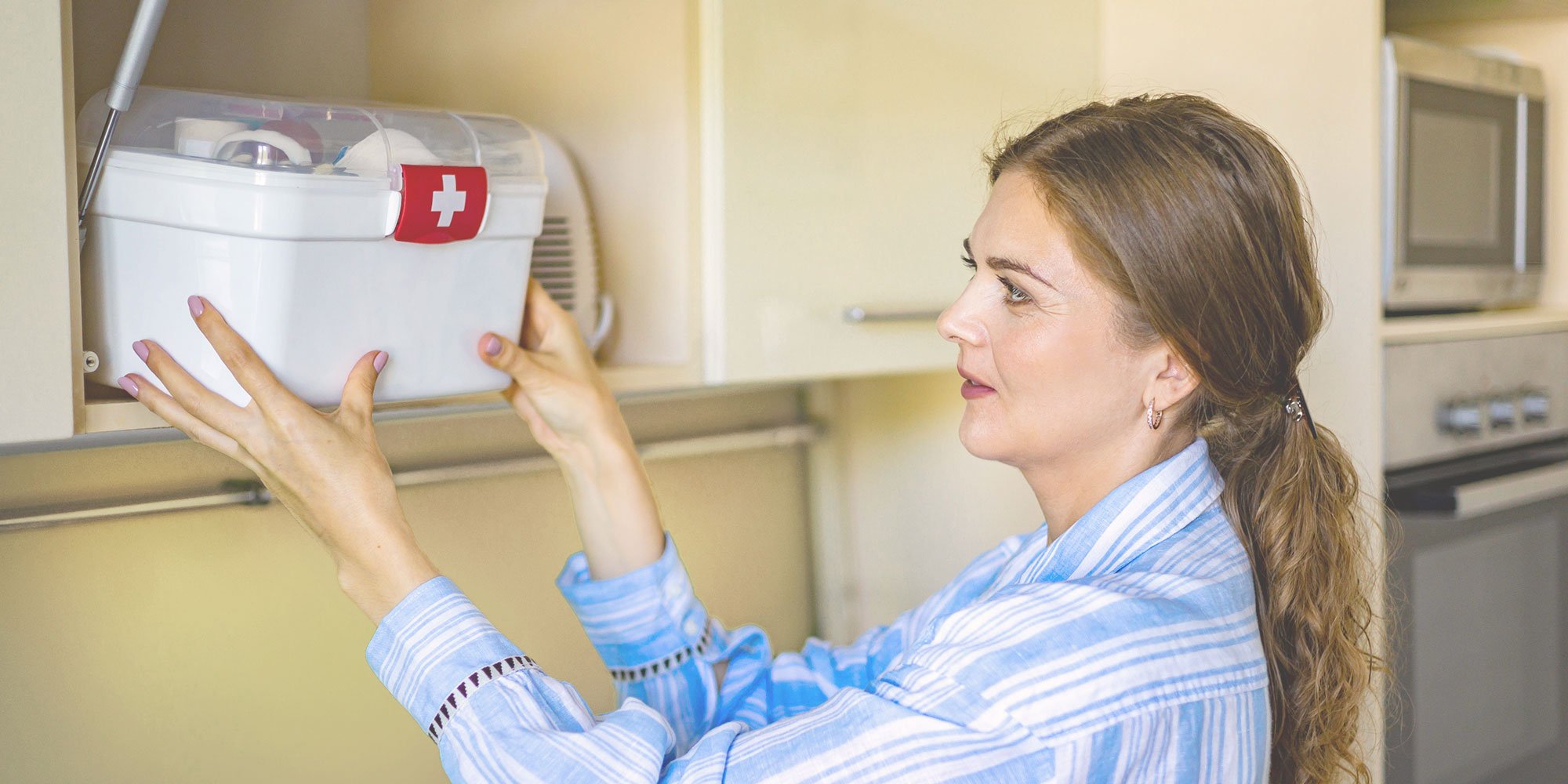
Do you have everything ready in your first aid kit? Having medication and other pharmacy products well organized helps us control any medical treatment.
In the first aid kit we must have on hand the basic elements that could be useful in case of an emergency, such as gauze, bandages, alcohol, tweezers or scissors. Additionally, it is important to regularly check the expiration date of medications and replace them if necessary.
We explain how to prepare an ideal first aid kit with everything you need, in addition to your blister pack of organized medication.
You may be interested in: Downloadable guide to organize your first aid kit.
What is a first aid kit, and what function does it have?
When we talk about a first aid kit, in this case a homemade one, we are referring to a container in which to organize medications, in addition to the material required to treat minor discomforts. These are small cuts, minor or superficial wounds that can be treated at home.
The objective of the first aid kit is to have the necessary utensils and have easy and quick access to them, in order to immediately treat situations such as those mentioned above.
When we take care of elderly or dependent people, it is necessary to have a first aid kit that adequately covers all their needs. If you care for the elderly at home, and not in a nursing home, they should have easy access to the first aid kit, as well as the manual pill box where you organize their medication, or weekly blister pack.
Some of the essential items that a first aid kit should contain are:
- Medicines for pain and fever (paracetamol, ibuprofen...)
- Thermometer
- Band-aids or tape
- Scissors and tweezers
- Hydrogen peroxide, alcohol and cotton
- Gauze
- Sales
- Anti-inflammatory creams or ointments
- Disposable gloves
Download our free guide to always have these tips at hand:
What should a first aid kit not contain?
If we want to keep our medication well organized, we have to be clear that a home medicine cabinet is not a container in which we can store expired medications, nor other drugs with specific temperature conditions (some, for example, should be stored in the refrigerator). Nor should we use it as a pill box, and mix daily doses with utensils. The pills should always be organized in a weekly blister.
As we mentioned, there are a series of myths when organizing medication that you should take into account. Among them, we find the elements that you should never put in a first aid kit.
- Remains of medications already used. An example of this would be half pills left over from previous doses. Having been removed from their original packaging, as happens with homemade pill boxes, over time their properties are lost, and they may not act in the same way. In addition, these remains can contaminate other drugs, or dissolve and adhere to utensils such as gauze or scissors.
- Obsolete tools or those that have stopped working properly:Remember that we are talking about our health and that of our loved ones. Therefore, it is important to ensure that the utensils are in perfect condition to avoid infections or accidents.
- Mix treatments:If you live with more people, make sure their medications are not confused. One of the biggest problems of the therapeutic adherence It happens due to not organizing the medication correctly, missing doses or getting pills mixed up. Do not mix your daily intakes and keep them in an organized SPD or weekly blister pack.
- Expired medication or that it should no longer be taken. In this case, we recommend going to the SIGRE point at your usual pharmacy to dispose of this medication properly and without harming the environment.
Tips for organizing your medicine cabinet
- Each of the medications you have must remain in its original container, with the package insert. Remove the packaging and organize the medication, for example, in a manual pill box, whether weekly or monthly,could deteriorate the pads. If you are caring for an elderly person, keep close control of all medications, since the pills could lose their properties and effects.
- When we talk about older people, we recommend enter the name of the patient for whom that specific medication is directed, in order to quickly identify it. This occurs especially in nursing homes, but also when there are more than two polymedicated people at home.
- Evita Save those pills that are left over after finishing the treatment prescribed by your doctor. The fact of accumulating all the pills in one place can lead to confusion between the new ones and the previous ones, and carelessness in this regard can have serious consequences. To avoid this, organize your treatment or request a tailor-made SPD, where your medical plan will be prepared with the right daily intakes.Â
- Do not throw away conventional medication: This is one of the biggest doubts among patients: "What should be done with expired medications or medications that I no longer need?" When you have expired medication, you should take them to the pharmacy and then place them in the SIGRE containers, in order to achieve optimal disposal and be careful with the environment.
- Finally, It is very important to check the first aid kit often.Do not let more than 6 months pass without reviewing the medication, and check its status and expiration date. This point can save you a lot of headaches when caring for the elderly or organizing your own medical plan.
Being aware of what we need, as well as the items we have and their condition will be of great help for polypharmacy patients.
Now it's your turn: have you checked your first aid kit yet?
Disclaimer: At IMA we offer advice and information about our products. Consult with an expert before making any decision that may affect your health.