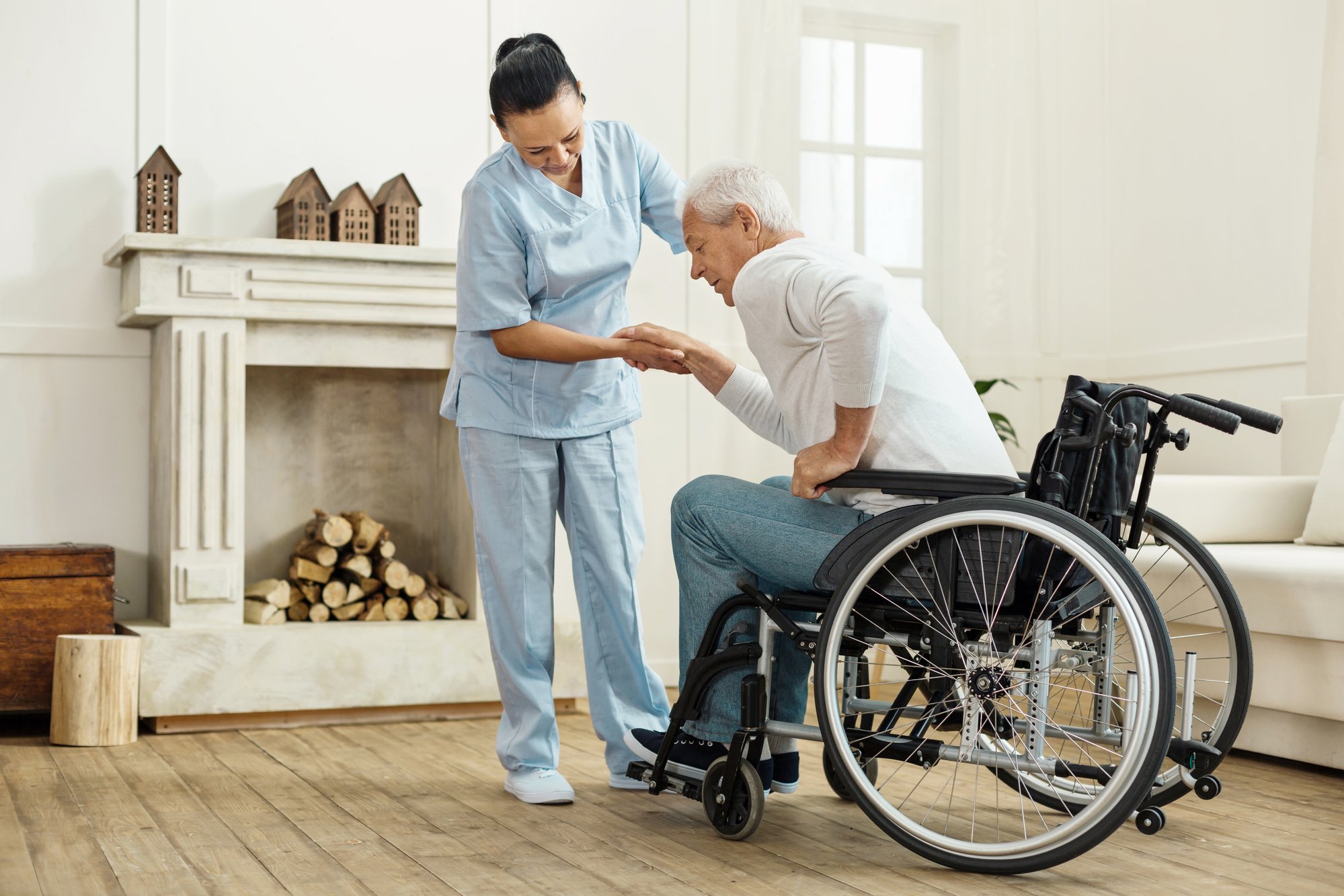
Do you know what degrees of dependency are? If you care for a family member or an elderly person, they may require your help to perform certain tasks. They can be small errands, such as shopping, or simpler actions, such as getting dressed.
In order to categorize these needs, in Spain we have degrees of dependency, a classification used to detect the type of assistance that each person requires.
Also know about dependency aid.
In this article we explain what degrees of dependency are, and how to request them.
What are degrees of dependency?
The degrees of dependency allow us to evaluate the attention that a person requires in their daily life.
They are used to measure the level of dependency based on their abilities to perform basic activities, such as dressing, feeding, or washing themselves.
We can classify the degrees of dependence into3 categories, differentiated by the assistance required by each person. From least to greatest need, we can find:
- Grade I: moderate dependence
- Grade II: severe dependence
- Grade III: great dependence
These 3 degrees of dependency are included in the Dependency Law of 2006, which includes the Promotion of Personal Autonomy and Care for people in a situation of dependency.
How are degrees of dependency evaluated?
When evaluating the degrees of dependency, a Dependency Assessment Scale is made where the needs of each person are scored.
This assessment takes into account autonomy when carrying out common daily tasks. These can be:
- Being able to get in and out of bed
- Move around the house autonomously
- Carry out personal hygiene tasks
- Control of bathroom needs and use
- Dressing and undressing
- Eat and drink
In addition to these activities, degrees of dependency also take into account other more complex functions, known as instrumental activities of daily living. These functions include:
- Moving without means of transportation
- Make purchases of products and services
- Prepare meals
- General cleaning
- Do housework
- Medication management
In order to carry out a complete assessment, it must be carried out by a primary care professional and a social worker. We explain how to request a review of dependency degrees in our free guide.
Degree of dependency I, or Moderate dependency
The degree of dependence I is called moderate dependence, since in this case the necessary assistance is punctual,but necessary, at least, at least once a day.
It is also possible that you present support needs intermittently, while still maintaining some independence to live independently.
In the classification of degrees of dependency, grade I ranges between 75 and 100 points.
Degree of dependency II, or severe dependency
Regarding the degree of dependency II, we speak of a severe dependency, since the help is no longer punctual, requiring assistance 3 or 4 times a day.
There are decisive factors when establishing one degree of dependency or another. Keep in mind that helping to make the purchase once a week is not the same as constantly monitoring the follow-up of medical treatment.
Degree II dependency is between 50 and 74 points in the final score of the Dependency Assessment Scale.
Degree of dependency III, or Great dependency
Degree of dependency III is the most severe, since autonomy has been totally lost, and needs a person to assist him almost continuously throughout the day.
Actions as basic as eating or going to the bathroom are totally impossible for people who are highly dependent. They are not capable of going out on their own, and in many cases they have health problems such as Alzheimer's.
Degree of dependency III corresponds to a score between 75 and 100 points.
Free aid for people in a situation of dependency
In addition to the aid that the state makes available to us, some companies offer free support to dependent people who take medication regularly.
In polymedicated or chronic people, taking pills can be a difficult task. For this reason, at IMA Health we collaborate with pharmacies so that prepare the medication divided into daily doses, for each week and throughout the month and send it to the person's home.
IMA Health offers you a service so that you can receive your medication organized at your doorstep.. Furthermore, it will not be necessary for you to present proof of the degree of dependency, since we offer this service to all those who follow a long-term medical plan.