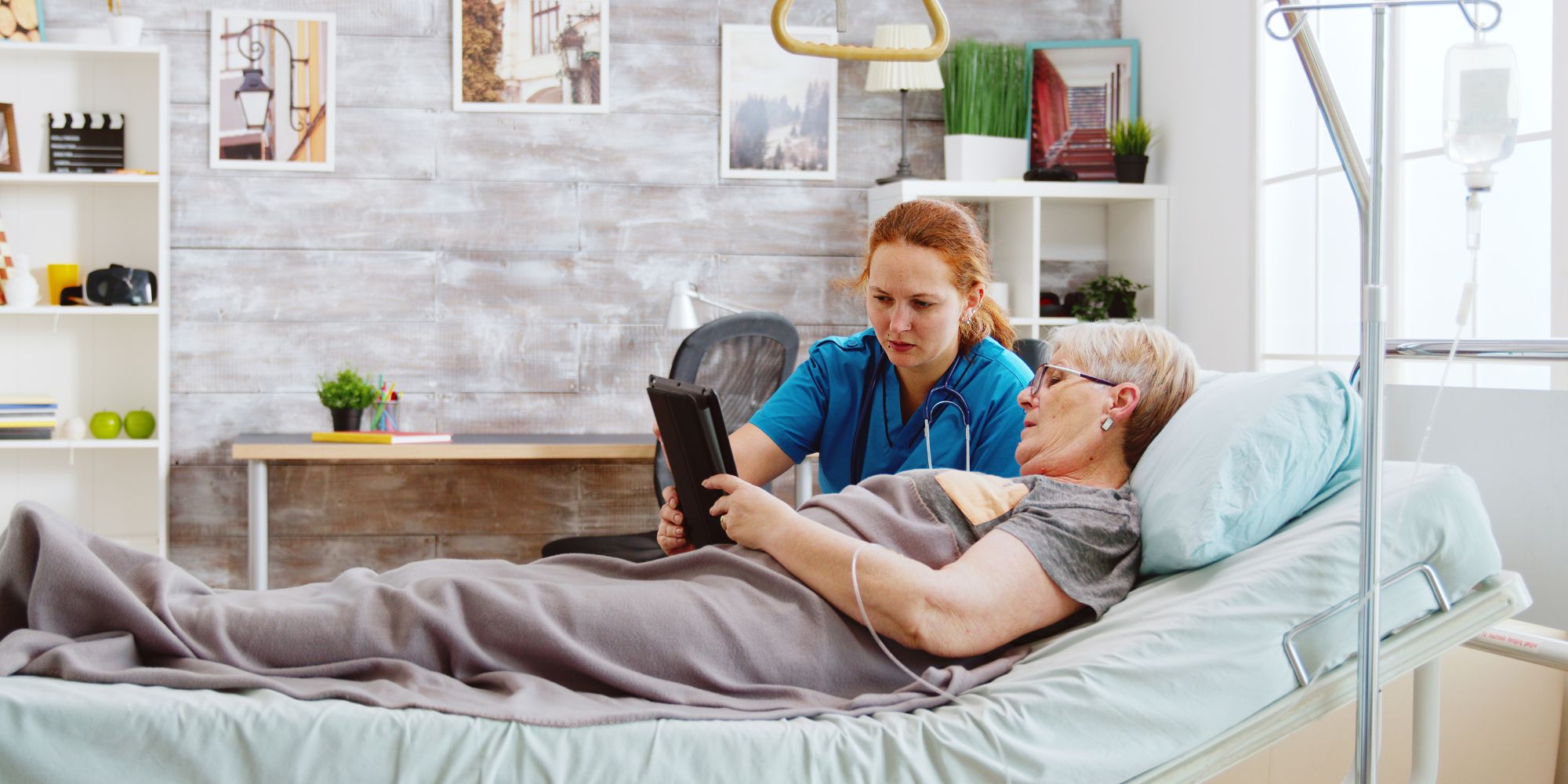
For many, enjoying the comfort of home represents an emotional benefit that medical centers can rarely offer. Therefore, cases where the patient requests to receive this care at home are common.
Luckily, it is possible to offer complete, quality care at home, even for those facing a serious illness, or a significant deterioration in their health.
Palliative care at home focuses onimprove the quality of life of patientsand their families, relieving symptoms and providing emotional support in the last days of the patient's life.
You may be interested in:Caring for a dependent person as a family: tips and obligations.
In this article you can learn more about home care for the elderly or those with advanced illnesses.
What will you find in this article?- What is palliative care?
- Where is palliative care provided?
- What palliative care can be done at home?
- How to provide the appropriate medication at home?
What is palliative care?
To fully understand how we can provide palliative care at home, we must ask ourselves: What is palliative care?Â
Palliative care is a form of medical care focused on relieving pain and suffering for people facing a serious, chronic, or terminal illness. This treatment is intended for people of any age, regardless of the stage of the disease, diagnosis or prognosis.
That is, contrary to popular belief,Palliative care is provided whenever a patient requires it, whether due to a temporary or total loss of dependence, and not necessarily because he is in a terminal phase of the disease.
Where is palliative care provided?
Palliative care is provided in hospitals, nursing homes, home care centers, and other healthcare settings.
However, it is also possible to offer palliative care at home. This is a healthcare option that allows patients to receive treatment in their own home environment, comfortably and safely.To do this, it is necessary to have a team of prepared and coordinated professionals, who ensure the well-being of the patient, and ensure that all their needs are covered.
Some of the professionals may be specialized doctors, therapists, home caregivers, or nurses.
What palliative care can be done at home?
It is important to note that palliative care at home is a form of personalized care, and that it must be adapted to the individual needs of each patient, or the resources of the family.
These are some of the most popular:
- Help during grooming:When taking care of someone with reduced mobility, the most common thing is to perform personal hygiene with cloths or other instruments that allow us to carry out this task, avoiding transfers.
- Travel at home: Shared use areas such as the bathroom or dining room must be designed and adapted to the needs of our family member. There are different assistive devices for palliative care patients, and they can usually be found in orthopedic centers.
- Pain control: Analgesics and other therapies are often prescribed to relieve pain, as well as to treat other symptoms. Therefore, you should pay special attention to the organization of daily intakes, or request the free SPD pharmacy service.
- Medical and nursing services: Despite receiving palliative care at home, you must coordinate medical visits at home, either to perform cures or to monitor your family member's health status.
- Occupational and physical therapy: Another of the professionals who usually get involved in this type of treatment are therapists. They can work with the patient to improve coordination and independence in basic tasks, such as dressing, bathing, and eating.
- Emotional support:One of the most important reasons when carrying out care at home is the possibility of accompanying your family member in the most difficult moments.
- Help during grooming:When taking care of someone with reduced mobility, the most common thing is to perform personal hygiene with cloths or other instruments that allow us to carry out this task, avoiding transfers.
Don't forget that palliative care at home must be given under specific conditions. A hospital environment also has great advantages, such as the immediate attention of trained professionals.
On the other hand, Some patients may prefer medical care in a hospital or hospice. Remember to consider the services you can offer at home, and those available in a center, to assess which is the best option.
How to provide the right medication at home?
In many cases, it is the same family members who They are in charge of organizing the pillbox, and prepare the patient's daily intake. Therefore, It is very important to have professional support to help us during this process.
A very popular option is to request the SPD service, that is, the organization of the medication in weekly blister packs. With this system,a pharmacist helps you plan your medication for the entire month,separating the shots depending on the day and time in which they should be taken.
Getting the service is very simple. As a social impact company, at IMA Health we help you find those pharmacies that provide the SPD service at no cost, allowing you to receive it at your doorstep.
Discover how to receive organized medication
Disclaimer: At IMA we offer advice and information about our products. Consult with an expert before making any decision that may affect your health.